Have you ever thought about what’s happening beneath your floors? The crawl space, often overlooked, can be the source of significant problems in your home. From rotting wood and pests to air quality issues and high energy bills, the condition of your crawl space can have a big impact on your home’s efficiency and structural integrity.
Fortunately, crawl space encapsulation is an effective solution to prevent these issues. Let’s explore some common crawl space problems and how encapsulation can help protect your home.
If you’re noticing rising energy bills or inconsistent temperatures in your home, your crawl space may be contributing to the problem. In Georgia, nearly every home relies on heating and cooling, which accounts for about 53% of your energy use. If your crawl space isn’t properly sealed, the air you’re heating or cooling could be leaking into the void beneath your floors.
According to the U.S. Department of Energy, poorly sealed and insulated crawl spaces can cause up to 30% of your home’s energy loss. Worse, if your heating ducts run through the crawl space and aren’t insulated, you could lose as much as 60% of your heated air before it ever reaches your living spaces. This inefficiency not only wastes energy but also increases your utility costs.
Encapsulating your crawl space can prevent a variety of costly issues and protect your home. Here are some key benefits:
Encapsulation helps protect your home’s structure by preventing problems like rotting joists, damaged plumbing, and ruined insulation. By keeping moisture and pests out of your crawl space, you reduce the risk of significant structural damage that can lead to expensive repairs.
Without proper protection, crawl spaces can become an entry point for pests like rodents, termites, and insects. Encapsulation creates a barrier that keeps pests out, saving you from the costs of extermination and potential damage caused by these unwanted guests.
Did you know that more than 40% of the air you breathe in your home comes from the crawl space? If that space is full of mold, mildew, or moisture, your air quality will suffer, potentially causing allergies and respiratory problems. Encapsulation helps maintain clean, healthy air by preventing moisture buildup and keeping harmful particles out of your living spaces.
Heavy rainfall and poor drainage can lead to flooding and groundwater seepage in your crawl space. Encapsulation acts as a waterproof barrier, shielding your home from potential water damage that could cost thousands to repair.
Moisture in the crawl space can cause mold and mildew to spread, potentially damaging items like furniture, important documents, and sentimental belongings. Encapsulation prevents this moisture from reaching your home’s interior, protecting your valuables from damage.
A damp, moldy crawl space can decrease your property’s value and turn off potential buyers if you decide to sell. Encapsulation helps preserve your home’s value by ensuring it remains dry, healthy, and structurally sound.
While both encapsulation and insulation are important for maintaining an energy-efficient home, they serve different purposes. Insulation is designed to reduce heat transfer, keeping your home warm in winter and cool in summer. It’s typically installed in walls, ceilings, and floors, including in crawl spaces.
Encapsulation, on the other hand, focuses on sealing your crawl space to block out moisture, pests, and outdoor air. Encapsulation creates a protective barrier that ensures a controlled environment in your crawl space, preventing issues like mold growth, wood rot, and temperature fluctuations.
In some cases, encapsulation may require removing old insulation if it’s trapping moisture. Once the insulation is wet, it can no longer perform its job and can even lead to mold growth. However, if the insulation is still dry and in good condition, it’s often left in place to support temperature control.
What is Crawl Space Encapsulation?
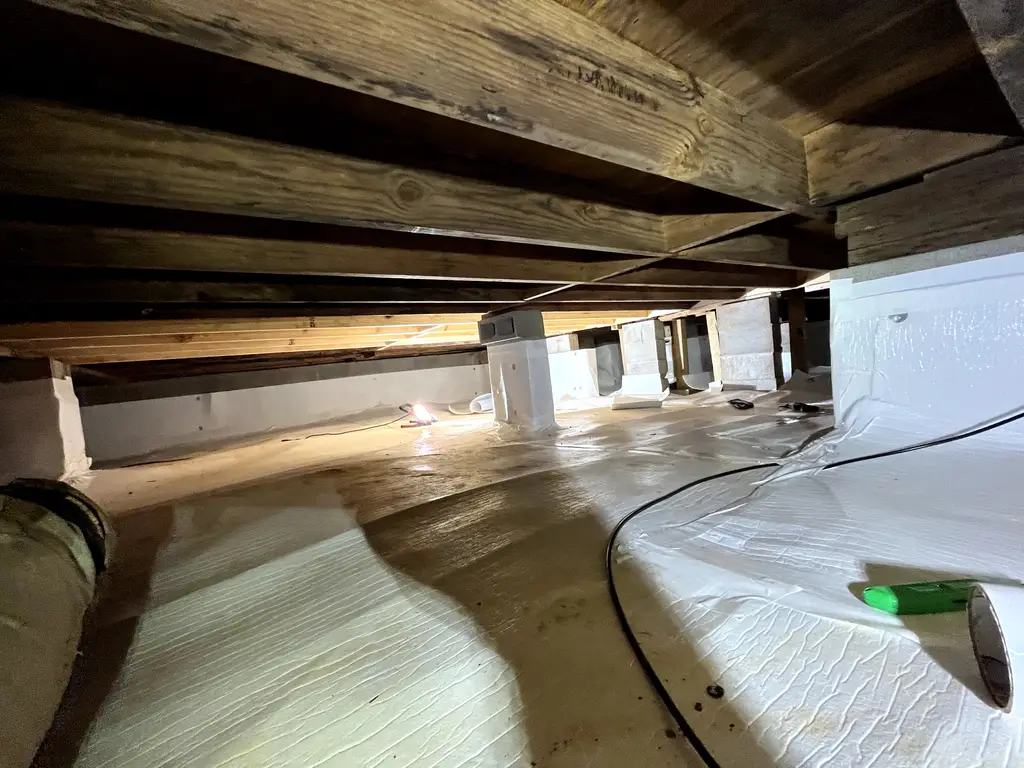
Crawl space encapsulation transforms your crawl space into a clean, dry, and controlled environment by sealing it off from external elements. The process involves installing a heavy-duty polyethylene vapor barrier across the crawl space floor, walls, and piers to block moisture and humidity.
Here’s how the encapsulation process works:
- Crawl Space Clean-Up: The first step is clearing out debris and sharp objects that could damage the vapor barrier. A clean space ensures the barrier remains intact and effective.
- Sealing Openings: All vents, doors, and other openings are sealed to prevent outside air and moisture from entering the crawl space.
- Installing the Vapor Barrier: A durable vapor barrier is placed on the floor, walls, and support beams to block moisture and keep the crawl space dry.
- Climate Control: A dehumidifier or crawl space conditioning system is installed to regulate humidity and maintain a consistent environment, reducing the risk of mold growth and improving energy efficiency.
If you’re considering crawl space encapsulation, it’s important to find a reliable contractor. Here are a few factors to consider when choosing the right professional for the job:
- Experience: Look for a contractor with extensive experience in crawl space encapsulation. Ask how many projects they’ve completed and how long they’ve been in business.
- Licensing and Insurance: Ensure the contractor is licensed and insured to protect yourself from liability in case something goes wrong.
- Reputation: Check online reviews and testimonials to see what previous customers say about the contractor’s quality of work and professionalism.
- Price: While it’s tempting to choose the lowest bidder, be cautious. Extremely low quotes may indicate the use of inferior materials or shortcuts that could lead to bigger problems in the long run.
Not all homes need crawl space encapsulation, but if you’re experiencing any of the following issues, it might be time to consider it:
- Musty odors
- High indoor humidity levels
- Cold floors, even during warmer months
- Visible mold or mildew
- Frequent pest infestations
If any of these signs sound familiar, crawl space encapsulation could be a smart investment to protect your home from long-term damage.